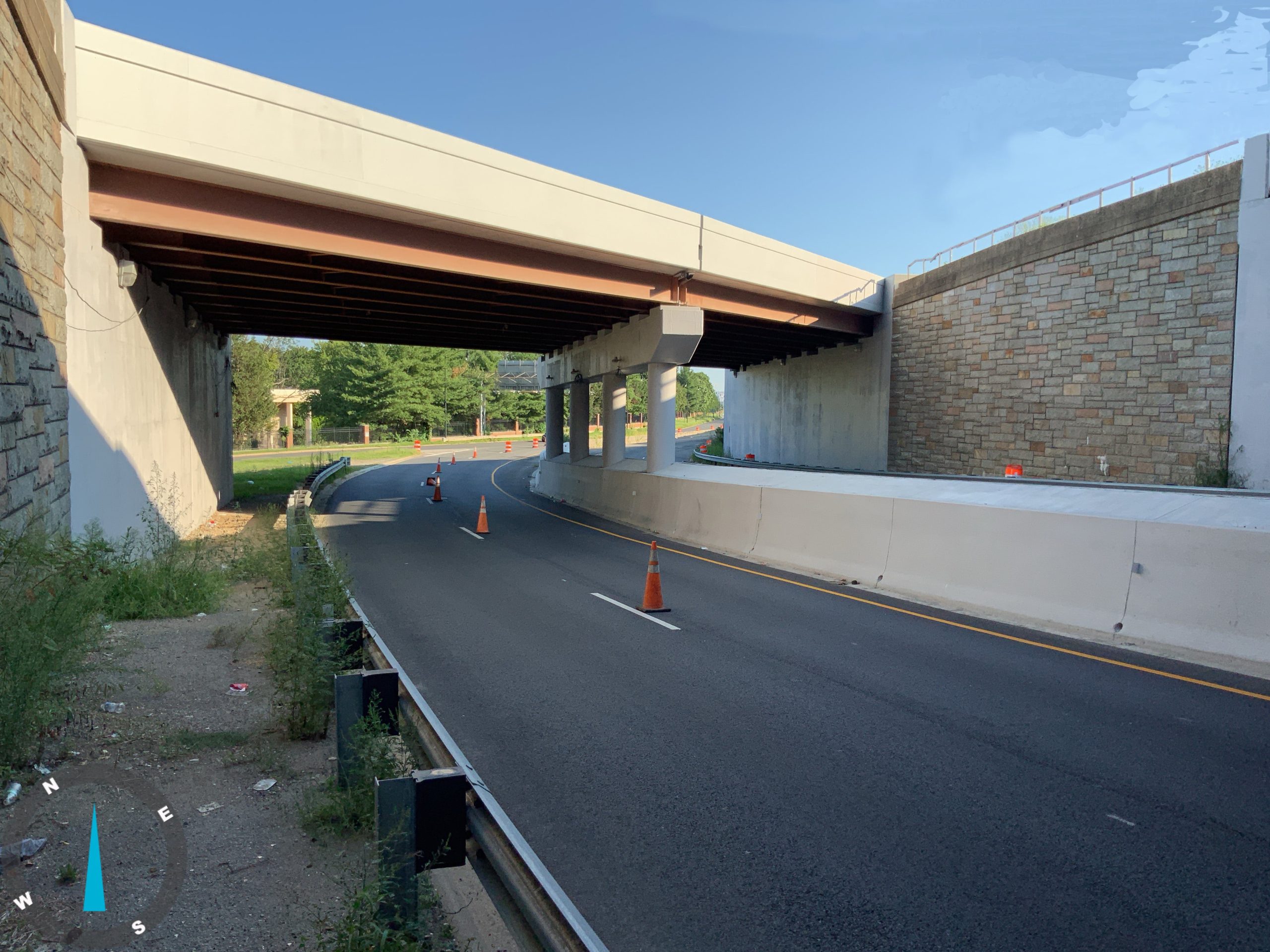
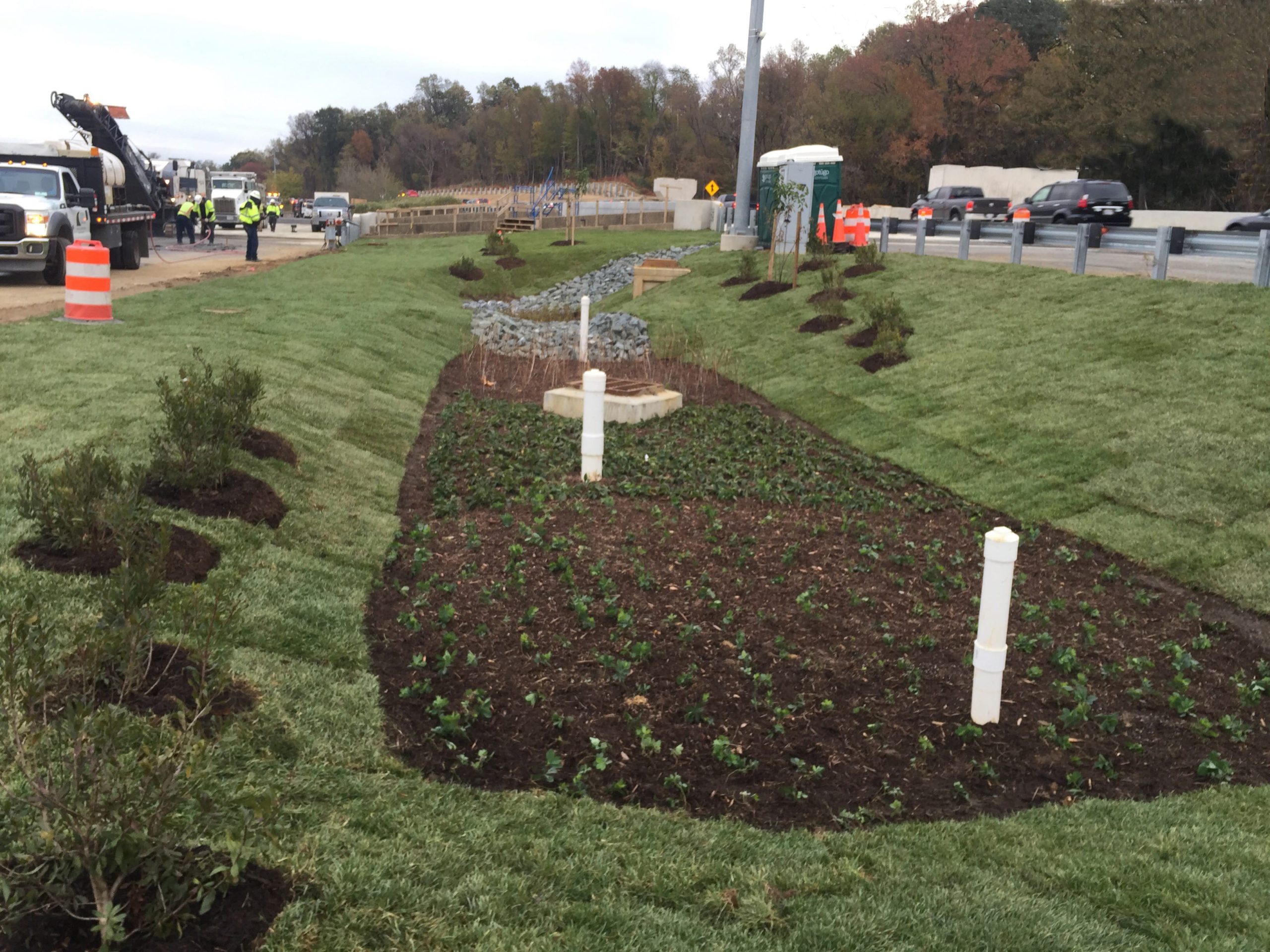
This project rehabilitated the northbound and southbound I-295 steel-girder bridges over South Capitol Street (150 feet long each) to bring them up to current standards and prolong the life of the bridges for another 20 years. The project involved replacing the superstructure using accelerated bridge construction techniques including prefabricated bridge elements; substructure repairs; bridge bearing replacements; latex modified concrete; pier cap strengthening using fiber-reinforced polymer; new roadway pavement construction; milling and overlay of existing pavement, construction of a bioretention planter and rain garden; installing new drainage, signage, and streetlighting; and relocating utilities,
Construction Management:
As the prime consultant and DDOT’s advocate, CES conducted the full range of inspection and construction management services including materials, document, schedule, and cost management; agency coordination; and public outreach to ensure construction met DDOT’s goals for quality, function, cost, and schedule.
The project involved a few challenges that required additional resources from CES. For example, demolition and erection of the new bridge sections had to be completed within 72 hours within 4 lane closures. CES mobilized extra inspectors to provide full coverage of operations to achieve this ambitious schedule. We also supplied extra inspectors to cover 48 hours of non-stop emergency repair work when a sink hole developed on South Capitol Street.
With more than 100,000 motorists traveling along this congested high-speed freeway each day, this project had the potential of causing severe regional traffic impacts. Maintenance of traffic was further complicated by the construction of Malcolm X Interchange project on I-295 just a short distance away. CES coordinated with the I-295 bridge contractor and the Malcolm X Interchange project to revise the sequence-of-construction plans to accommodate traffic and avoid conflicts throughout the entire corridor and conducted a time impact analysis to verify the new plan would not negatively change the schedule. Also, we implemented an effective public outreach and communication plan, which was instrumental in avoiding regional traffic impacts.